4
min read

At 3 a.m. on a Saturday, a welder's spark catches a scrap of insulation inside an unfinished commercial building. There's no working fire suppression system because the building isn't done yet. There's no one on site because the crew left at five. By the time a passerby notices the smoke and calls 911, the fire has spread across two floors and caused significant financial losses in structural damage. The project timeline just shifted by four months.
This scenario plays out more often than most people outside the construction industry realize. And it's exactly the kind of loss that firewatch services in Oklahoma are designed to prevent.
Firewatch is one of those terms that sounds self-explanatory, but the specifics matter. Who's responsible for it, when it's required, and what separates a qualified firewatch officer from someone just walking around with a flashlight - these details can determine whether a construction site stays on schedule or becomes a cautionary tale.
At its core, firewatch is the assignment of a trained person to continuously patrol a building or site where the fire protection system is impaired, not yet installed, or temporarily shut down. The purpose is simple: detect fire, alert occupants, and contact the fire department. This is a human-led role that cannot be replaced when systems are offline, ensuring continuous on-site monitoring during high-risk conditions..
The requirement comes from NFPA 1, the Fire Code, and is enforced locally by the Authority Having Jurisdiction, which in Oklahoma is typically the state fire marshal’s office or the local fire department. Firewatch is mandatory whenever a building’s sprinkler system is offline for maintenance, a fire alarm panel is non-operational during construction, or hot work—such as welding or cutting—is performed near combustible materials. Compliance is not optional; it is a legal and code-mandated requirement. .
The International Fire Code (IFC) Section 3311 specifically addresses fire safety during construction and demolition, requiring fire watches whenever fire hazards are present and normal fire protection systems are not available. Failing to comply doesn’t just increase the risk of fire—it also exposes contractors to stop-work orders, fines, and significant legal liability if an incident occurs.
Welding, brazing, soldering, grinding, torch cutting — any process that produces sparks, open flame, or enough heat to ignite nearby materials qualifies as hot work. OSHA's standard on fire prevention (29 CFR 1926.352) requires a fire watch whenever hot work is performed in locations where anything more than a minor fire could develop
Here's where construction sites get complicated. Unlike a finished building with clearly defined fire zones, a construction site is a constantly changing environment. What was a safe welding location on Tuesday might be surrounded by stacked lumber and plastic sheeting by Thursday. Materials move. Trades overlap. And the person performing the hot work is focused on the task, not on what's happening three feet behind them.
A dedicated firewatch officer solves this problem. They're not welding. They're not running pipes. Their entire job is to watch for ignition, maintain a clear area around the hot work, and have the means to either extinguish a small fire or immediately call for help. OSHA requires the fire watch to continue for at least 30 minutes after hot work concludes, because materials can smolder and reignite well after the torch is turned off.
On a large commercial building in Tulsa, say a new mixed-use development along Brookside or a warehouse expansion near the turnpike, hot work might be happening on multiple floors simultaneously. Each location needs its own firewatch. That's not a job you hand to the nearest apprentice. It requires trained, alert personnel who understand fire behavior and emergency procedures.
Most general contractors think of construction site security and firewatch as two separate line items. Security handles theft, vandalism, and trespassing. Firewatch handles fire prevention. But on a practical level, the same site conditions that create fire risk also create security risk, and the same professionals can address both.
Modern construction sites often rely on a combination of security measures, including cameras, access control, and remote monitoring. Firewatch services don’t replace those systems - they reinforce them during periods when fire protection infrastructure isn’t yet operational or is temporarily impaired. While cameras and monitoring provide visibility, a firewatch officer ensures there is an immediate, on-site response to evolving risks.
An unfinished building without a functioning alarm system is at risk for more than just fire. Theft of materials like copper, wiring, and plumbing components costs the U.S. construction industry an estimated $800 million each year, making unsecured sites a prime target for opportunistic criminals. Vandalism to electrical panels, HVAC equipment, and plumbing can set a project back weeks. Unauthorized persons on a construction site at night create liability exposure for the general contractor and the property owner.
When a security company in Tulsa provides firewatch services, the officer on site isn't just watching for smoke. They're also a visible deterrent to theft and trespassing. They're documenting site conditions. They're verifying that gates are locked, that no unauthorized vehicles are present, and that materials are stored safely. This dual function makes firewatch a more cost-effective investment than most contractors initially assume.
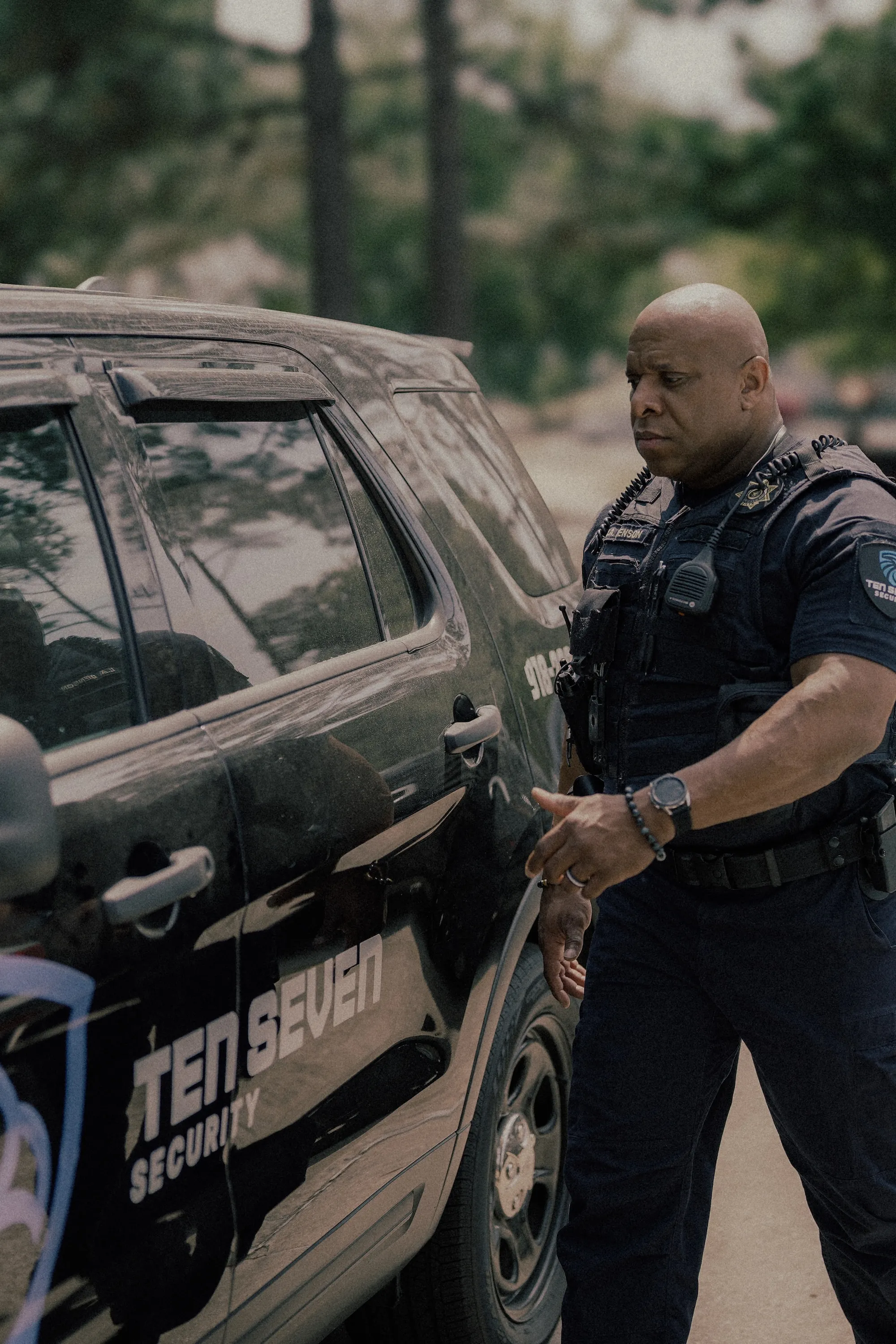
TenSeven Security's officers come from law enforcement and military backgrounds, which means they bring more than fire awareness to the site. They bring situational awareness, professional communication skills, and the judgment to handle unexpected situations without overreacting or under-responding. When your firewatch officer also prevents a $40,000 copper theft, the return on investment speaks for itself.
Here's something that catches contractors off guard: simply having a warm body on site doesn't satisfy firewatch requirements. The person performing firewatch must be trained in the use of fire extinguishing equipment, familiar with the site's fire emergency procedures, and capable of activating the building's fire alarm if one exists.
The fire marshal's office can and does ask for documentation. Who was on watch? What hours did they cover? What training have they completed? Were patrol logs maintained? If the answers aren't clear and well-documented, the contractor is exposed, both to regulatory action and to litigation if an incident occurs.
This is where the gap between a staffing agency that sends a random guard and a professional security firm becomes a real liability issue. Commercial security services in Oklahoma that specialize in construction site work understand the documentation requirements, maintain proper training records, and provide detailed patrol logs that satisfy both the fire marshal and the general contractor's insurance carrier.
TenSeven Security provides daily check-ins for all security updates, including firewatch assignments. Our clients don't find out what happened on their site by accident. They get structured reports covering patrol times, observations, any incidents or near-misses, and confirmation that all firewatch positions were staffed as required. That kind of transparency isn't a bonus feature. For a firewatch, it's a necessity.
Oklahoma's construction sector has experienced steady growth in recent years. According to the Oklahoma Employment Security Commission, construction employment has increased consistently through 2025, and the pipeline of commercial projects in the Tulsa metro area continues to expand without signs of slowing.
A new hotel is being built downtown. Industrial facilities near the port. Medical office expansions in south Tulsa. Multifamily housing developments along the Route 66 corridor. Each of these projects reaches a phase where fire protection systems aren't yet operational, but hot work, electrical installation, and other fire-risk activities are well underway. That's the firewatch window, and it can last weeks or months depending on the project's size and complexity.
General contractors who plan for firewatch early in the project timeline avoid the scramble of finding qualified coverage at the last minute. They also avoid the temptation to assign firewatch duties to someone who's already doing another job on site, which is both a code violation and a recipe for missed hazards.
Building firewatch into the project budget from the start, alongside other construction site security measures, is a straightforward way to protect the investment, maintain compliance, and keep the schedule on track.
A qualified firewatch provider should deliver more than presence. In many cases, firewatch services are coordinated alongside existing site monitoring or security systems to ensure complete coverage across both safety and security risks. Here's what the service should include from a firm that takes it seriously.
Trained officers who understand NFPA and OSHA fire watch requirements arrive on site with proper equipment, including fire extinguishers, communication devices, and documentation materials. They conduct continuous patrols of designated areas at intervals appropriate to the site's fire risk level. They maintain written logs of each patrol, noting conditions observed, any hazards identified, and actions taken. They coordinate with the site superintendent and general contractor on hot work schedules, impairment notifications, and emergency procedures. And they're available on short notice, because fire system impairments and hot work schedules don't always follow a predictable calendar.
TenSeven Security's 24/7 emergency service means that when a sprinkler system goes down unexpectedly at 9 p.m. on a Friday, you're not leaving your site unprotected over the weekend while you try to find coverage. One call gets a trained officer on site.
It's easy to look at firewatch as an overhead cost, especially on projects where margins are already tight. But consider what the alternative looks like.
A fire on an unprotected construction site doesn’t just damage the structure — it can destroy materials, delay the project, trigger insurance investigations, and result in OSHA citations with fines reaching tens of thousands of dollars for serious offenses and up to six figures for willful or repeated violations. If a worker or trespasser is injured, the potential liability escalates even further, making prevention essential.
Insurance carriers are paying attention too. Many commercial property and builder's risk policies now include specific language about firewatch compliance. A claim filed after a fire on a site that should have had firewatch coverage but didn't can be denied or significantly reduced. The cost of the firewatch service, typically a fraction of one percent of overall project costs, looks very different when compared against a seven-figure loss.
Professional firewatch services in Oklahoma aren't an expense. They're a risk management tool that protects the project, the people on site, and the contractor's reputation.
Whether you're a general contractor breaking ground on a new commercial build, a property owner managing a renovation, or a project manager planning your next phase of hot work, TenSeven Security can provide qualified firewatch officers as part of a broader construction site security strategy.
Our team understands both the fire code requirements and the practical realities of construction schedules. We'll work with your superintendent to build a coverage plan that matches your project's specific needs, from single-location hot work watches to multi-week impairment coverage on large-scale builds.
Give your team the support and peace of mind knowing they are covered. Do not hesitate to request a firewatch quote for your project today.
For more information and future updates, Ten Seven Security will be releasing additional announcement articles in the coming weeks.
Providing security solutions for those who demand safety without compromise.


%201%20(1).jpg)